
Rang Ghar: The Ultimate Guide to Asia’s First Amphitheatre and the Pride of Assam
When we talk about the rich heritage of India, the Taj Mahal often steals the spotlight. But hidden in the lush green landscapes of Sivasagar, Assam, stands a structure that predates many modern architectural marvels—the Rang Ghar. Standing tall as a testimony to the glorious Ahom Kingdom, the Rang Ghar is not just a historic monument; it is the soul of Assamese culture and stands proudly as Asia’s first amphitheatre.
For tourists, historians, and culture enthusiasts, Rang Ghar is a destination that offers a glimpse into a time when kings ruled with grandeur and communities celebrated with unity. In this comprehensive guide, we will explore the history, architecture, scientific marvels, and travel details of this iconic red structure.
1. Introduction: The Colosseum of the East
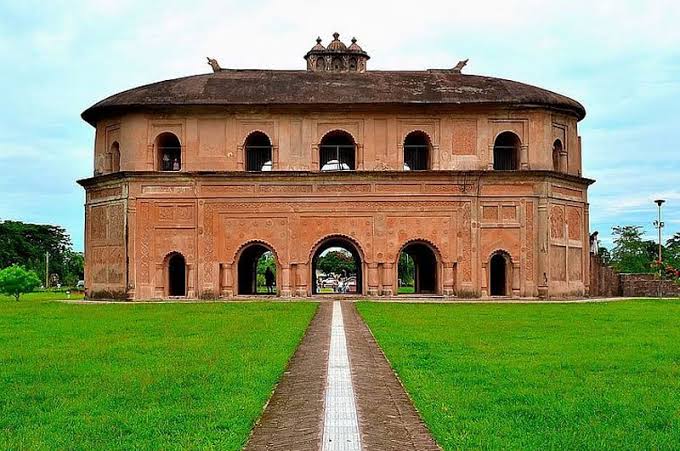
The name “Rang Ghar” translates to the “House of Entertainment.” Imagine a time in the 18th century, long before modern stadiums existed. The Ahom kings needed a place where they could sit comfortably and watch traditional games alongside their subjects. Thus, the Rang Ghar was born.Located in the Rupahi Pathar field of Sivasagar, this two-storied royal pavilion is often compared to the Roman Colosseum due to its purpose, though its architectural style is distinctly Assamese. It was the royal sports pavilion where Ahom kings and nobles witnessed thrilling buffalo fights, elephant fights, and various other traditional sports during the Rongali Bihu festival. Today, it serves as the logo of the 33rd National Games held in Guwahati in 2007, symbolizing Assam’s sporting spirit.
2. The Glorious History of Rang Ghar
To understand Rang Ghar, we must travel back to the golden era of the Ahom Dynasty, which ruled Assam for 600 years without falling to the Mughals.
Who Built It?
While the original structure was initially built using bamboo and wood during the reign of Swargadeo Rudra Singha, it was his successor, Swargadeo Pramatta Singha, who rebuilt it with brick and masonry in 1746 AD. This permanent structure has survived earthquakes, floods, and invasions for nearly three centuries.
The Purpose Behind the Construction
The Ahoms were known for their love of culture and physical prowess. The Rang Ghar was constructed specifically to serve as a royal viewing gallery.
- The Ground Floor: This area was primarily used for storing the equipment needed for the games and for the mesmerizing animal fights.
- The Upper Floor: This was the royal seating area (Pavilion). The King (Swargadeo) would sit here on his throne, accompanied by his high officials and dignitaries, to enjoy the spectacles unfolding in the Rupahi Pathar field below.
The building was strategically placed so that the view of the field was unobstructed. It wasn’t just a building; it was a symbol of the King’s connection to his people and their festivities.
3. An Architectural Marvel: The Ahom Engineering
The architecture of Rang Ghar is a fascinating blend of indigenous Ahom style and influences from Southeast Asia. Unlike the Mughal architecture prevalent in India during that period, the Ahom structures had a unique identity suited for the high-rainfall and seismic zones of Assam.
The Inverted Boat Roof
The most striking feature of the Rang Ghar is its roof. It does not follow the dome or minaret style. Instead, the roof is shaped like an inverted royal boat (Long Boat).
- Significance: The Ahoms came from the Shan kingdom (present-day Southeast Asia/China), where river culture was dominant. The boat-shaped roof reflects their heritage and their supremacy over the Brahmaputra river.
- Crokodile Ends: The roof ridge ends with a pair of carved stone crocodiles, adding a fierce and royal touch to the silhouette.
The Three Arches
The ground floor of the Rang Ghar is rectangular, but it features a series of trapezoidal arches. These arches are not just for beauty; they distribute the weight of the upper floor evenly. The entrance has three distinct archways, which were likely designed to allow elephants and palanquins to enter smoothly.
4. The Science Behind Its Durability: Why It Never Fell
Assam falls under Seismic Zone V, making it one of the most earthquake-prone regions in the world. Yet, the Rang Ghar has stood tall since 1746, surviving massive earthquakes like the Great Assam Earthquake of 1897 and 1950. How?
The secret lies in the “Organic Cement” used by the Ahom builders. They did not use modern cement or steel. Instead, they used a mixture called “Karral”.
The Secret Recipe of “Karral”
The mortar used to bind the flat, thin bricks (baked red bricks) was a masterful concoction of local organic materials:
- Bora Chaul (Sticky Rice): A special variety of glutinous rice found in Assam.
- Maati Maah (Black Lentils): Used for its binding properties.
- Duck Eggs: The protein acted as a hardener.
- Xon (Hemp/Jute fibers): Provided tensile strength.
- Lime (Chun) and Molasses (Guda): Mixed with fish oil.
This mixture created a bond that became harder than stone over time. It is breathable yet waterproof, allowing the structure to withstand heavy monsoons without developing deep cracks. This ancient sustainable technology is something modern engineers still study today.
The Interior Design
While the exterior is grand, the interior walls were once adorned with bright paintings and intricate carvings. Although time has faded many of these murals, you can still see traces of floral and geometric designs that speak of a sophisticated artistic taste.
5. Visitor’s Guide: How to Plan Your Trip
If you are excited to witness this architectural gem, here is a complete guide to planning your visit to Sivasagar.
🗓️ Best Time to Visit
The weather in Assam can be humid during summers. The ideal time to visit Rang Ghar is during the winter months (October to March). The weather remains pleasant, ranging from 10°C to 25°C.Special Tip: Try visiting during mid-April to witness the vibrant Rongali Bihu festival, where the entire town comes alive with culture.
🚗 How to Reach Sivasagar
Sivasagar is well-connected to the rest of India.
By Air: The nearest airport is Rowriah Airport in Jorhat (JRH), which is about 60 km away. From the airport, you can hire a taxi or take a bus to Sivasagar (approx. 1.5 hours journey).
By Train: The nearest major railway junction is Simaluguri Junction (SLGR), located about 16 km from the main town. You can also look for trains to Sivasagar Town Station (SRTN).
By Road: Sivasagar is well-connected by NH-37. Regular day and night super buses (ASTC and private) run from Guwahati (approx. 360 km) and other major towns in Upper Assam.
🎟️ Entry Fees & Timings
Timings: Open daily from 9:00 AM to 5:00 PM.
Entry Fee:
Indian Citizens: ₹25 (approx)
Foreigners: ₹300 (approx)
Photography/Video cameras may have a small additional charge.(Note: Prices are subject to change by the Archaeological Survey of India).
6. Nearby Attractions You Cannot Miss
A trip to Rang Ghar is incomplete without visiting the other Ahom monuments located nearby. Sivasagar was the capital of the Ahom Kingdom, so history is scattered everywhere.
- Talatal Ghar: Located just a few kilometers away, this was the grand palace and military base of the Ahoms. It is famous for its underground secret tunnels (now sealed).
- Sivadol: Standing tall on the banks of the Sivasagar Tank (Borpukhuri), this is one of the tallest Shiva temples in India.
- Kareng Ghar: Another royal palace located in Garhgaon, showcasing the lavish lifestyle of the Ahom kings.
7. Conclusion: Keeping the Legacy Alive
The Rang Ghar is not just a pile of bricks; it is a living symbol of Assamese pride, engineering brilliance, and a glorious past that stood independent for 600 years. Standing in front of it, you can almost hear the roar of the crowds cheering for the buffalo fights from three centuries ago.
As responsible travelers, it is our duty to preserve this heritage. When you visit, ensure you respect the monument—do not scribble on walls or litter the premises. Let us keep the “Red Pavilion” shining for generations to come.
Have you visited Rang Ghar yet? Share your experience in the comments below!